
Lettersmith
Lettersmith is a web application designed to support the drafting phase of writing in higher education settings. As project lead and lead designer, I helped shape product direction, guide scope, and align a cross-functional team around what the product needed to become more useful, more scalable, and easier to adopt.
My work spanned product discovery, facilitation, UX strategy, visual design direction, and collaboration with engineering and academic stakeholders. This was not just an interface design effort — it was a systems and workflow challenge that required clearer models for permissions, data collection, onboarding, and information architecture.
The challenge:
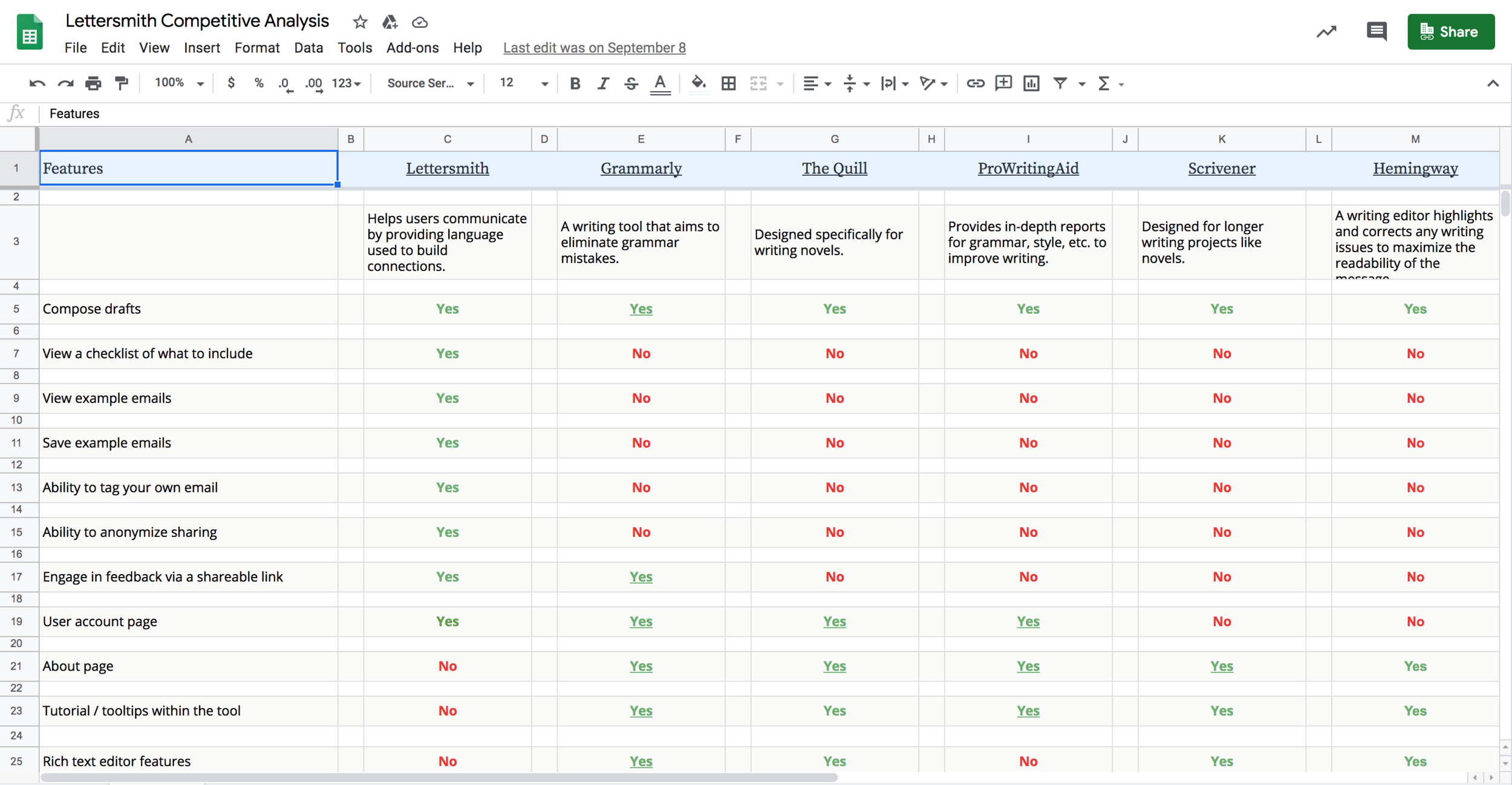
The product needed to support drafting workflows in educational environments while accommodating different users, evolving use cases, and institutional needs. That meant balancing usability with scalability and making foundational decisions about structure, permissions, and experience flows early in the product’s evolution.
My role and team
Project Lead and Lead Designer
Collaborated with another UX designer, an application architect, a software developer, a UX intern, faculty partners, and a behavioral scientist
Worked across one year of iterative product development cycles
Led facilitation, discovery, and design direction to help define next steps in product strategy and feature development
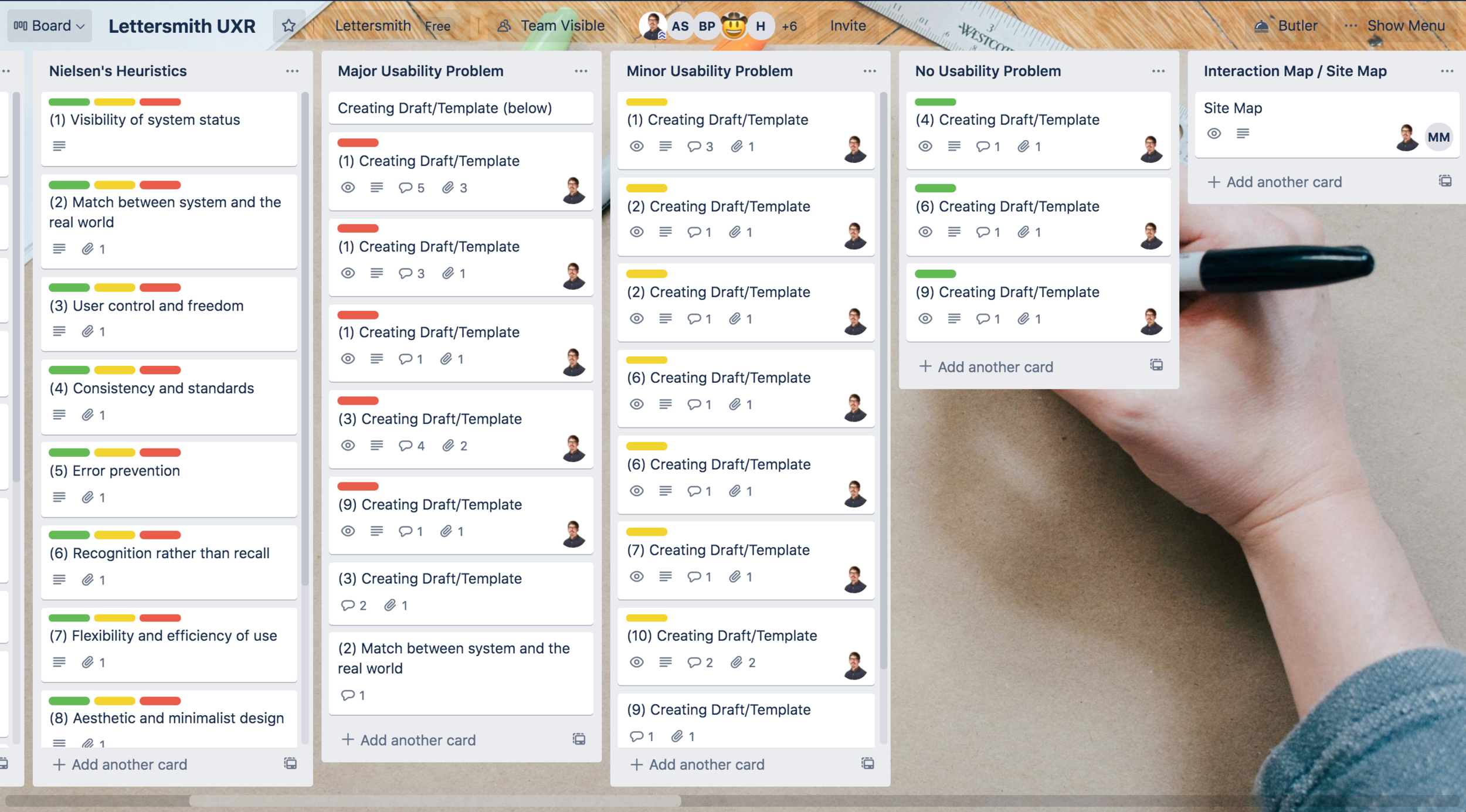
What I drove
Expanded adoption opportunities and strengthened partnership use cases
Led the team effort to define a new identity and design system
Helped define new permissions and data collection models
Reworked information architecture to improve usability and support scaling
Improved onboarding to better support new users and product adoption
Lettersmith is a strong example of the kind of work I enjoy most: ambiguous, cross-functional product design where experience quality depends on aligning user needs, system structure, stakeholder expectations, and implementation realities. That mix of strategy, facilitation, systems thinking, and execution is central to how I lead design work.

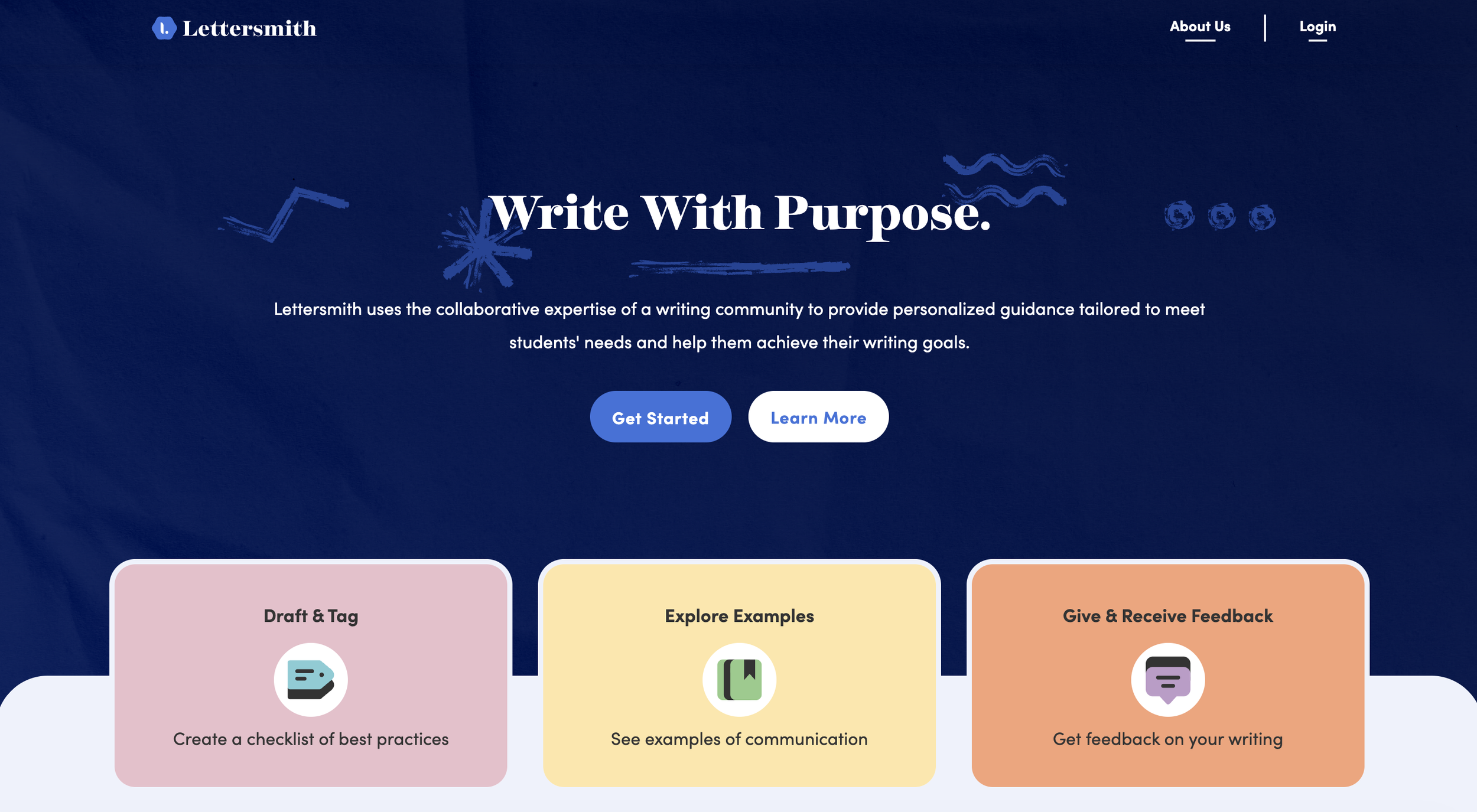
Current state but many founding UX/brand principles I created still exist within the product direction. Kudos to the ux designers at CAI