Modernizing JSTOR’s B2C subscription experience
Background
JSTOR’s individual-access business had long-term potential, but the purchasing experience had not kept pace with user expectations. JPASS already generated seven-figure annual revenue, yet the subscription flow relied on a legacy PayPal-based checkout that introduced friction, limited payment flexibility, and created avoidable drop-off at the moment of purchase. Internally, the work was framed as a key step in modernizing JPASS, growing revenue from individuals, and helping diversify JSTOR beyond institution-based income.
I led design for the new Stripe-based purchase experience, helping modernize the checkout workflow, reduce friction, and create a stronger foundation for future experimentation across pricing, subscriptions, promotions, and retention. The result was a substantially more modern and scalable buying experience that contributed to meaningful year-over-year business growth and helped establish individual access as an increasingly important revenue stream for JSTOR.
The challenge
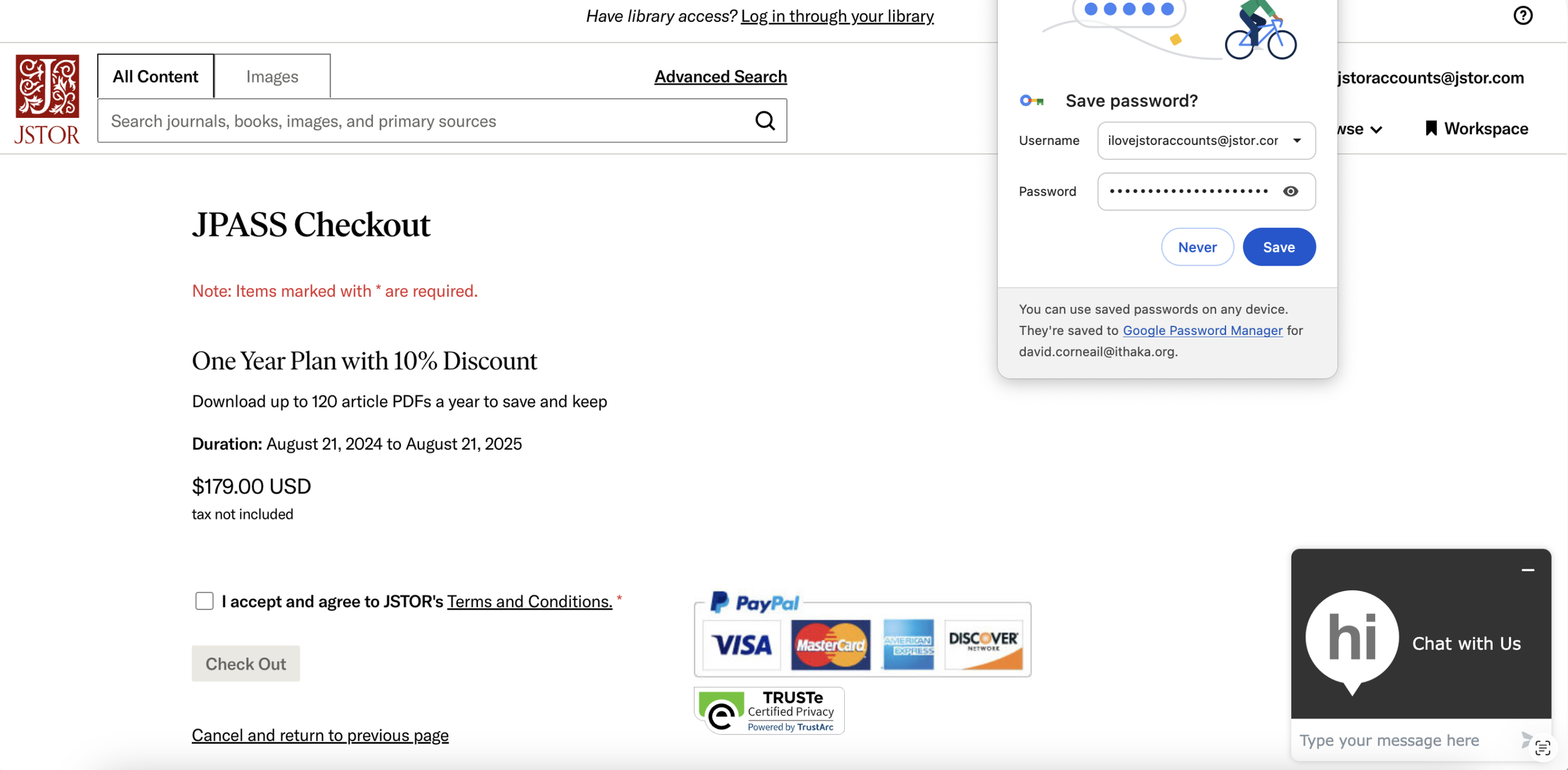
The old purchase flow created a poor buying experience for users and a brittle operational model for JSTOR.
The checkout experience was described internally as:
slow
restrictive
featureless
outdated
It required users to go through PayPal, even when paying by credit card, and in some markets that created additional barriers. It also meant JSTOR was manually handling more of the subscription, discount, tax, and billing complexity than it should have been. Internal framing noted that checkout abandonment after plan selection was roughly 50–60%, making the purchase flow one of the highest-leverage areas for improvement.
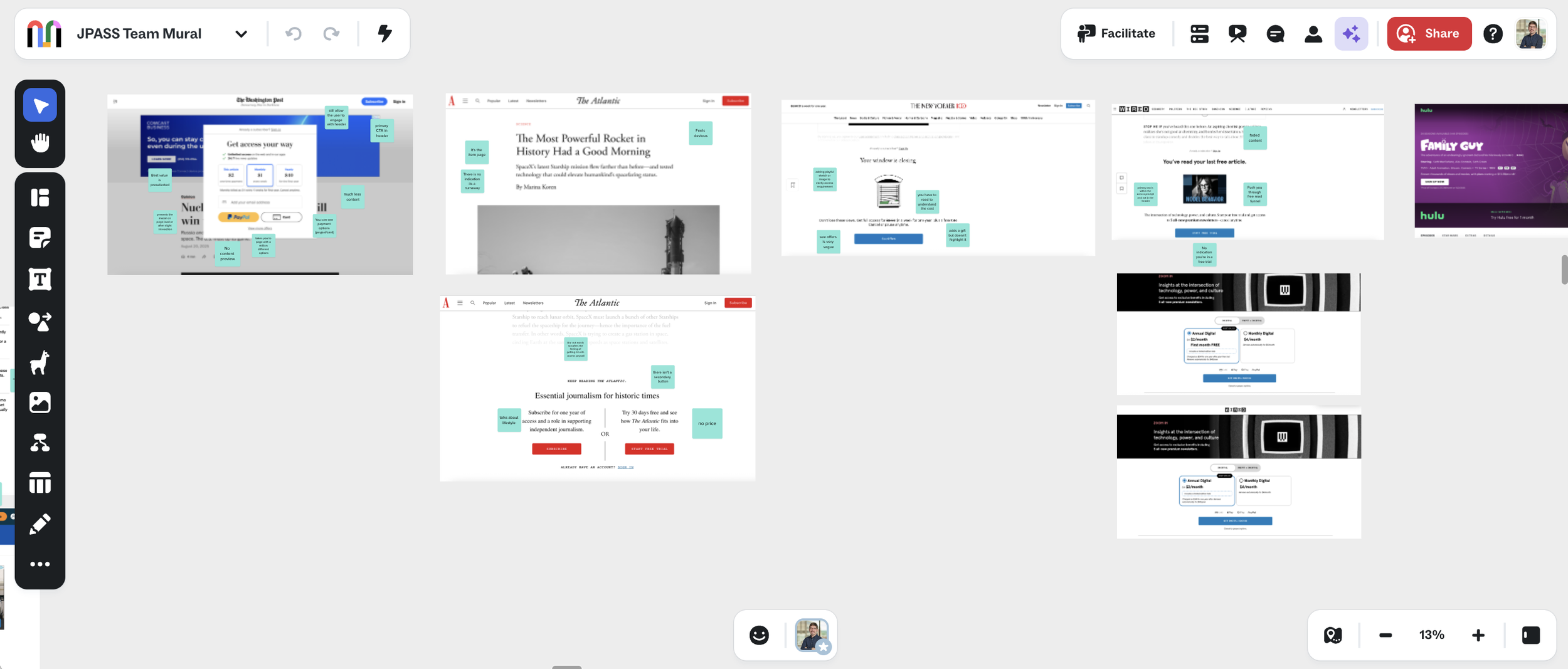
This made the project much more than a UI refresh. It required rethinking the full B2C purchase journey, including payment trust, plan presentation, clarity of value, error handling, supportability, and the surrounding funnel that got users into checkout in the first place.
My role
I led design for the new B2C purchase flow as part of JSTOR’s broader effort to modernize JPASS / Individual Access.
My work included:
leading UX for the Stripe integration
redesigning the purchasing workflow from billing through confirmation
refining copy and interaction details across the checkout flow
partnering closely with product, engineering, support, finance, and legal
helping shape a system that could support subscriptions, promotions, and future growth experiments more effectively than the prior PayPal flow
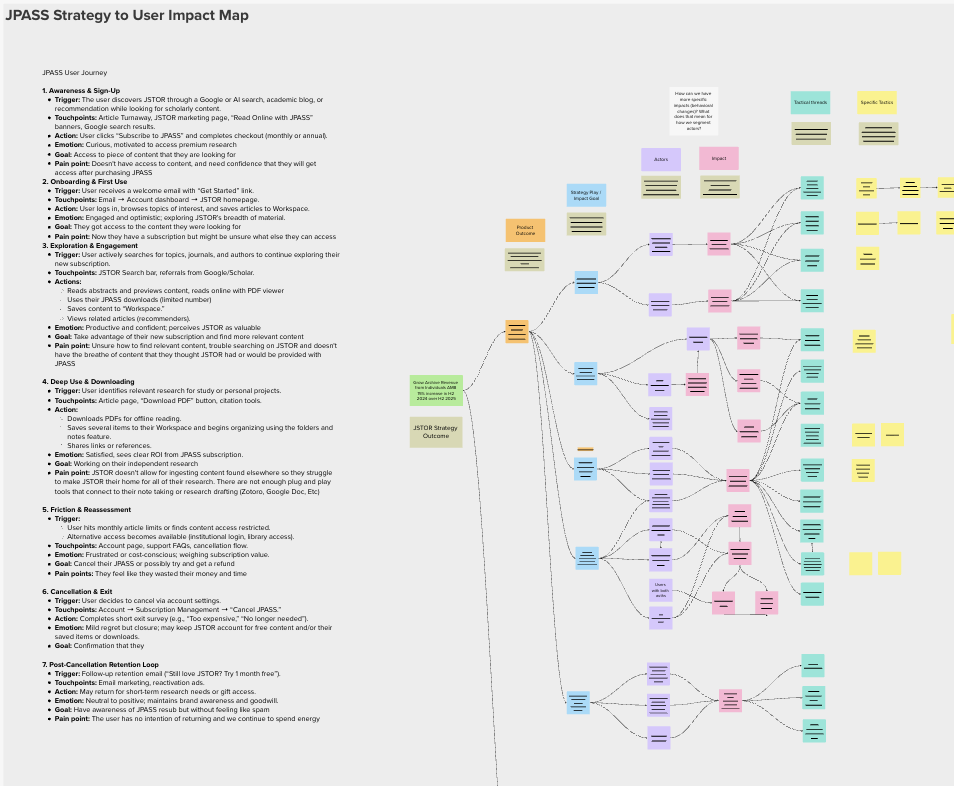
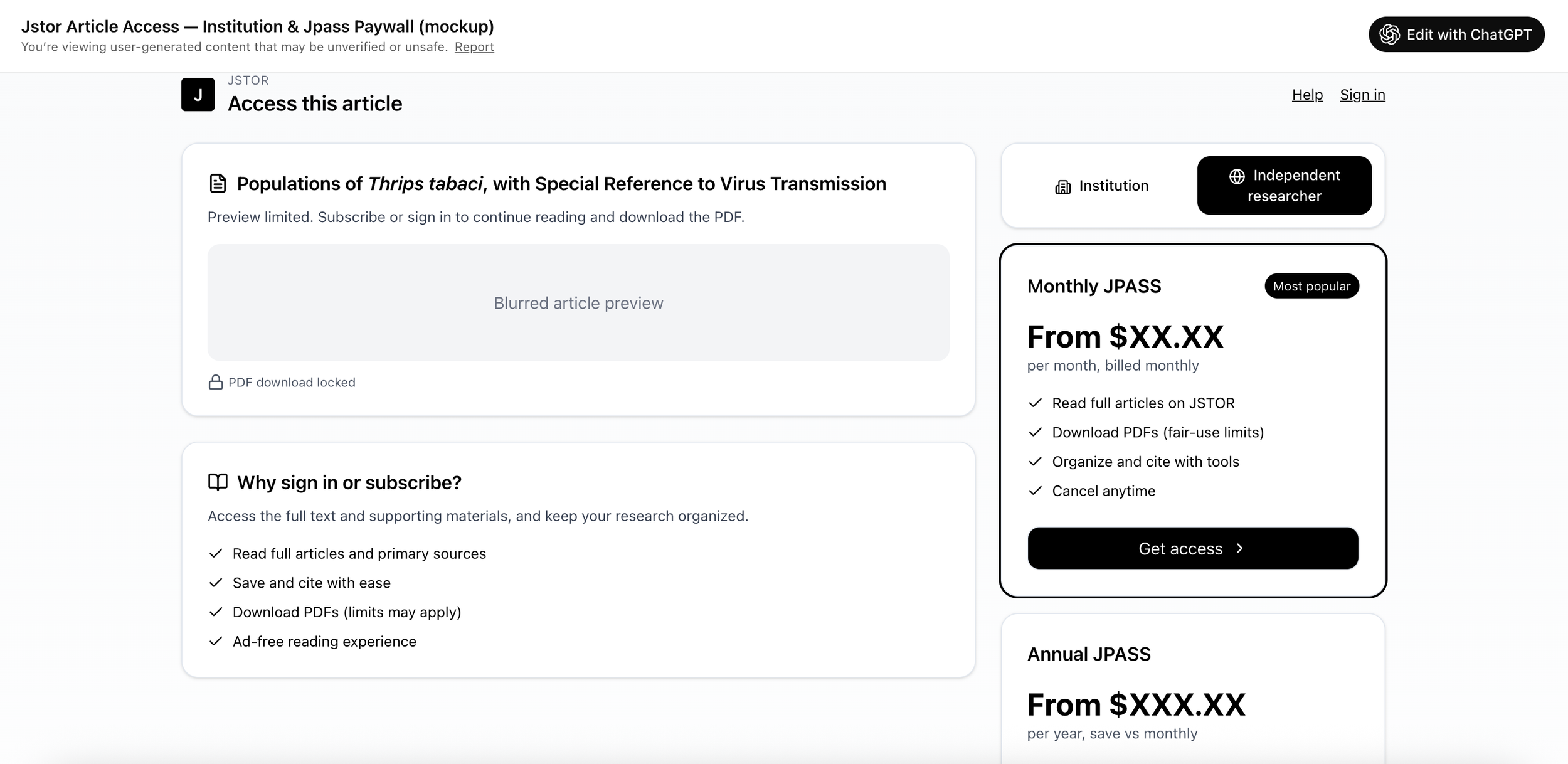
Example of vibe code prototype during team mtg
What changed
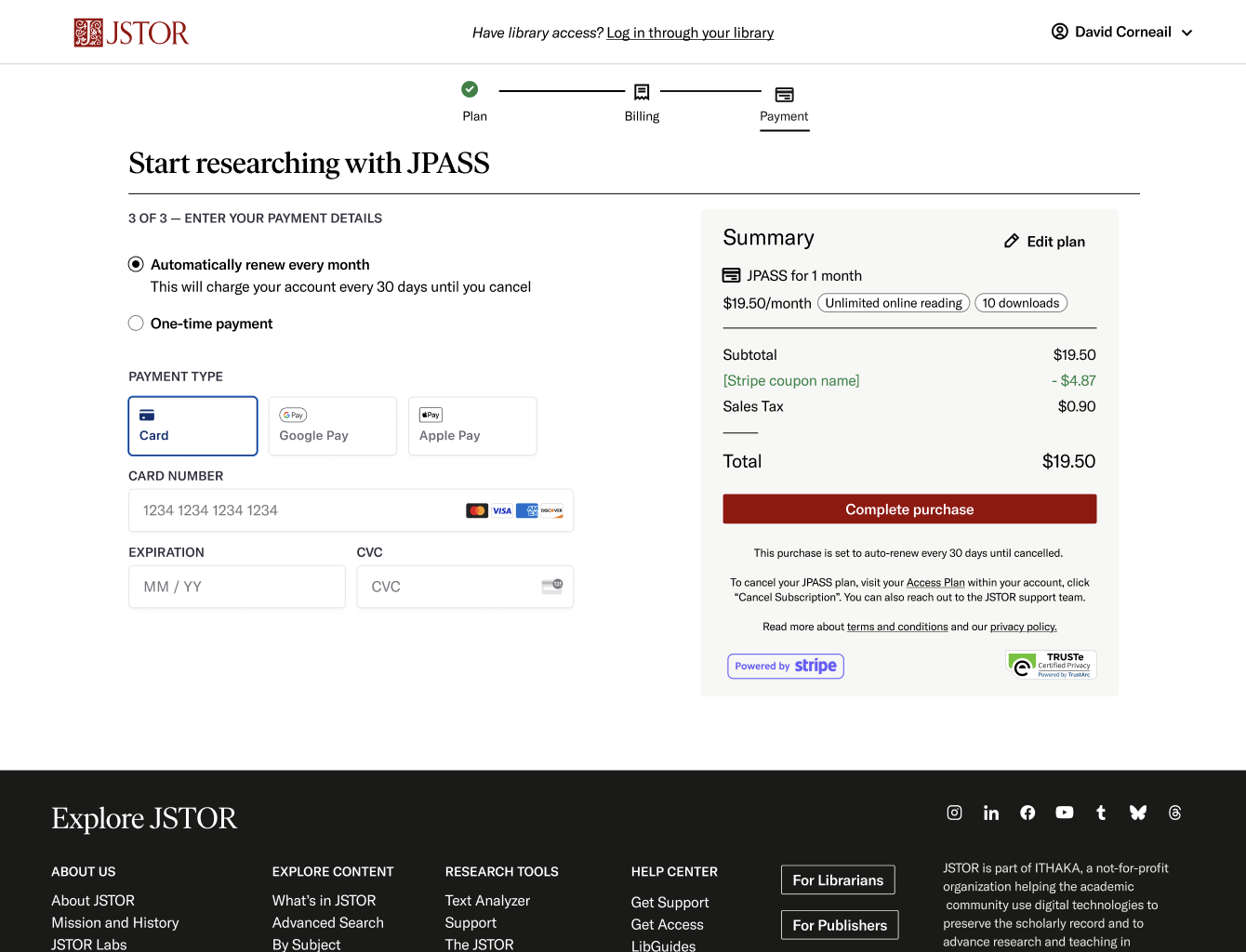
We moved from an off-platform, PayPal-dependent checkout to a more modern Stripe-based experience embedded in JSTOR’s product ecosystem. That shift enabled:
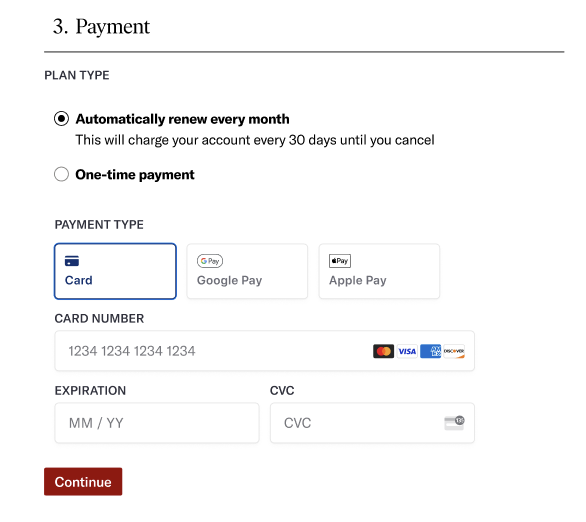
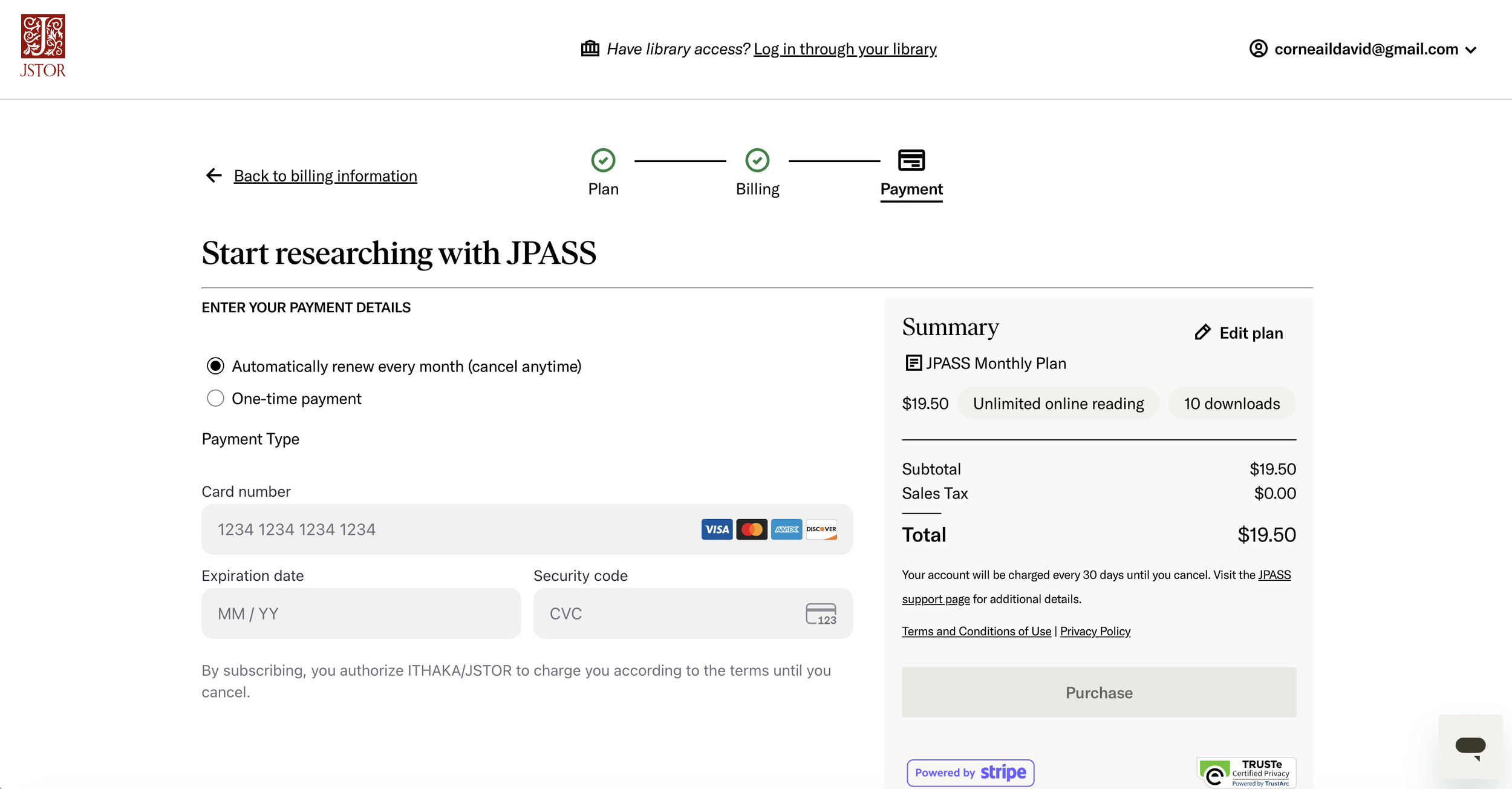
on-page credit card checkout instead of forcing a PayPal handoff
support for Apple Pay and Google Pay
better subscription infrastructure through Stripe Billing
improved tax handling through Stripe Tax
a more scalable system for discounts, promotions, and future billing enhancements
a clearer purchase journey with improved confirmation, billing, and account states
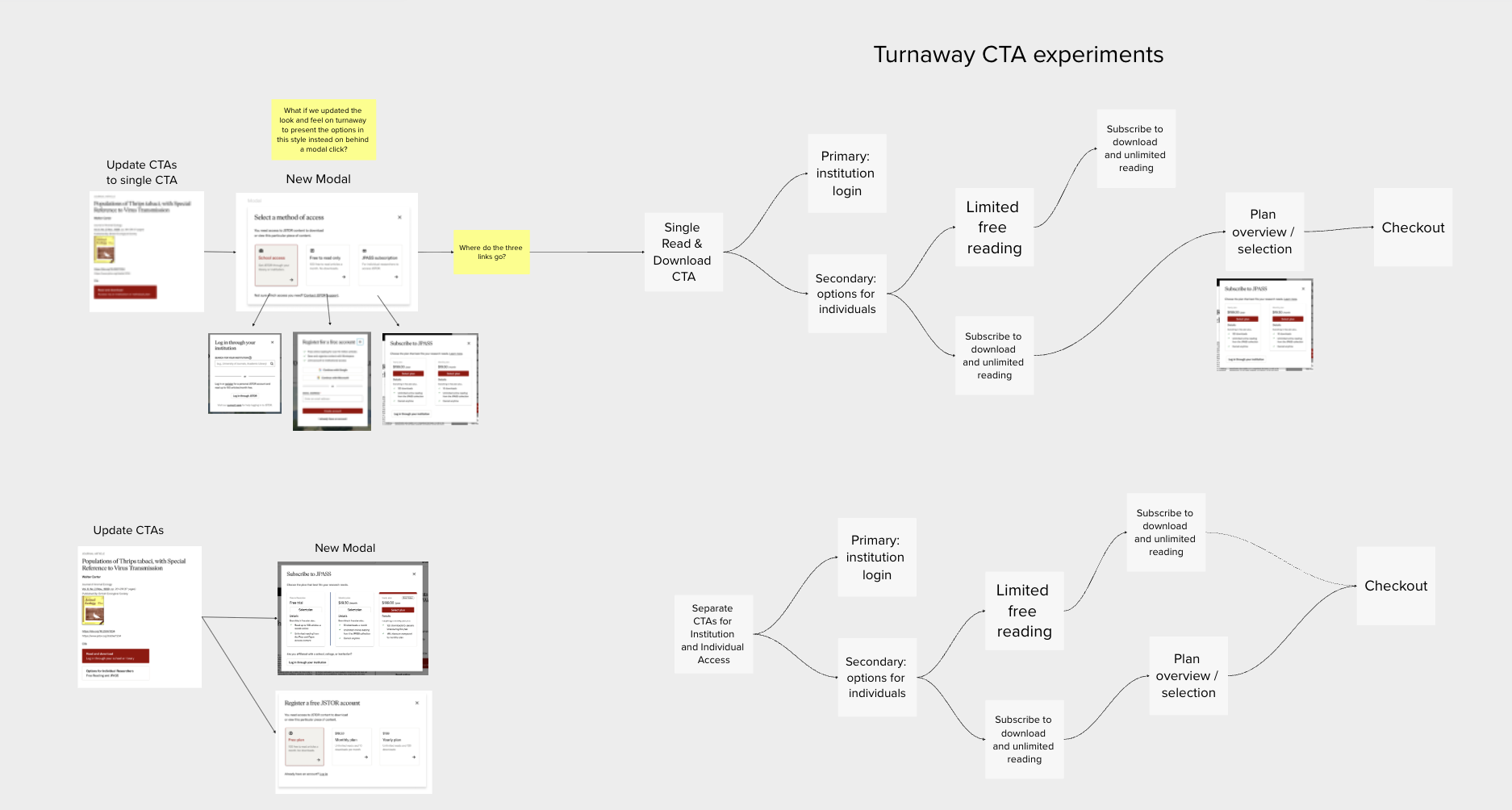
The team also invested in polish and clarity around edge cases and operational details: breadcrumb returns, summary-card improvements, validation and error states, renewal language, confirmation-page copy, and support-related flows. These details mattered because the goal was not simply to “add Stripe,” but to make purchasing feel trustworthy, understandable, and easier to complete.
Why Stripe
The move to Stripe was driven by both user experience and business needs. Internally, the team identified several reasons to replace PayPal:
PayPal required users to leave JSTOR and introduced conversion friction
PayPal had mobile and payment-method limitations
Stripe offered a more streamlined checkout experience with more payment options
Stripe created better infrastructure for subscriptions, taxes, and future billing complexity
the new system could reduce maintenance burden and improve scalability over time
This made the redesign strategically important. It wasn’t just a commerce UI refresh; it was foundational product work that supported growth, retention, and operational maturity.
Outcomes
This work helped modernize one of JSTOR’s most important direct-to-consumer workflows and contributed to measurable business momentum.
Internally, the initiative was tied to growing revenue from individuals and diversifying JSTOR beyond institution-based participation. In 2024, JPASS processed about $1.267M in revenue, confirming it was already a meaningful business line. By early 2026, product reporting showed the strategic play “Modernize JPASS to grow Archive revenue from individuals” tracking at roughly 18% YoY toward a 20% target, with another update citing ~21% uplift in Q1 2026 vs. Q1 2025 YTD.
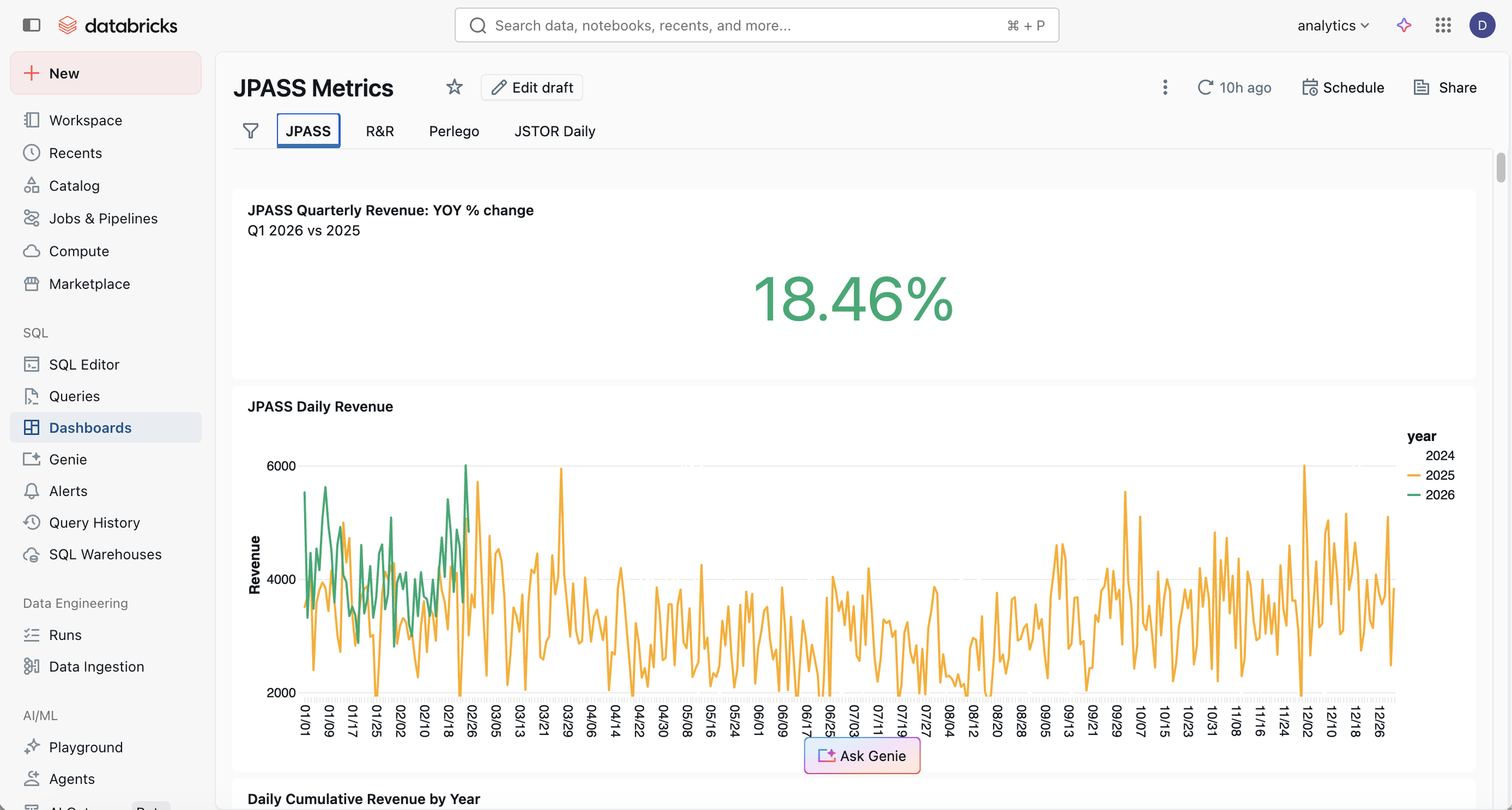
Other early signals included:
checkout conversion trending up
daily JPASS revenue trending up
support tickets trending down
increased monthly auto-renew plan adoption, helping create more predictable recurring revenue
More importantly, the Stripe migration created a stronger platform for continued optimization. Later updates note that the Stripe infrastructure reduced overhead for creating discounts and promotions and gave the team a better base for future top-of-funnel, retention, and pricing work.
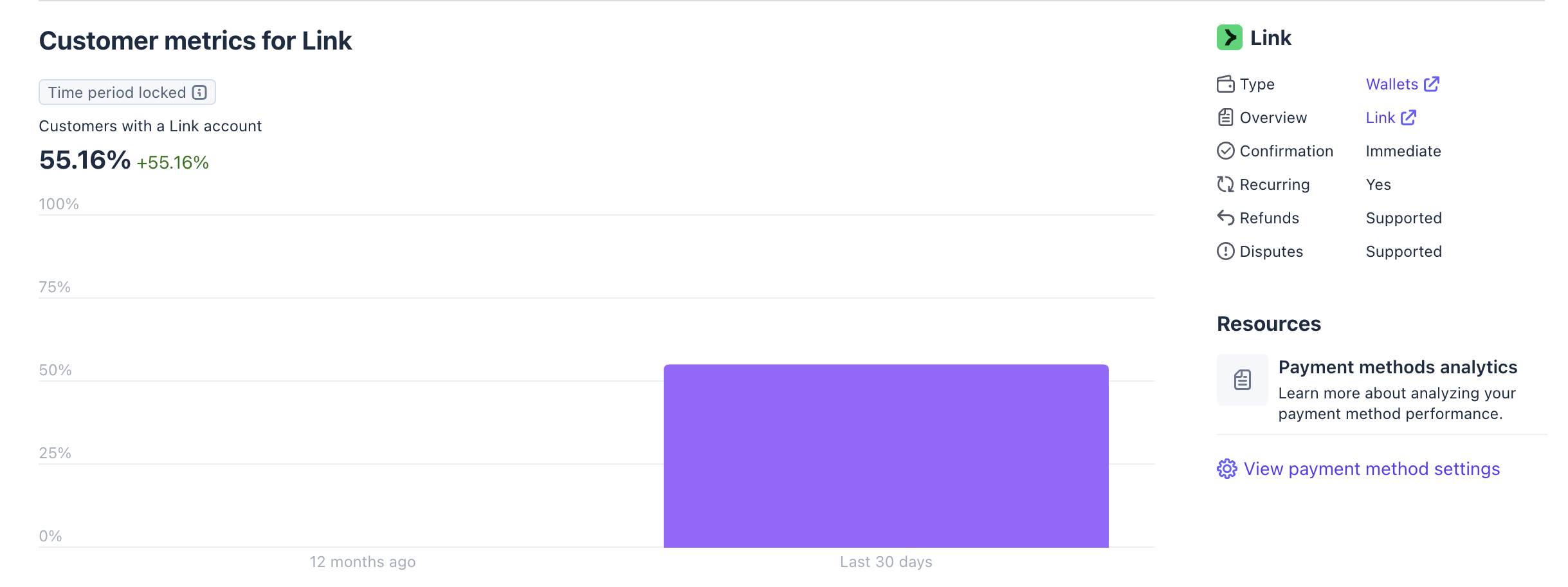
Stripe + UX realized 20% growth over a single quarter
Why this work mattered
This project helped prove that product design can directly influence business performance when it addresses friction at critical moments in the user journey.
By modernizing the purchasing workflow, we made JSTOR’s individual-access experience more aligned with contemporary B2C expectations while also supporting a larger strategic goal: building a more sustainable direct-to-user business that extends JSTOR’s mission and diversifies revenue beyond traditional institutional channels. That strategic framing appears repeatedly in JSTOR’s internal planning for the Individual Access Program.